#11: a visual ode to the irani cafes of bombay
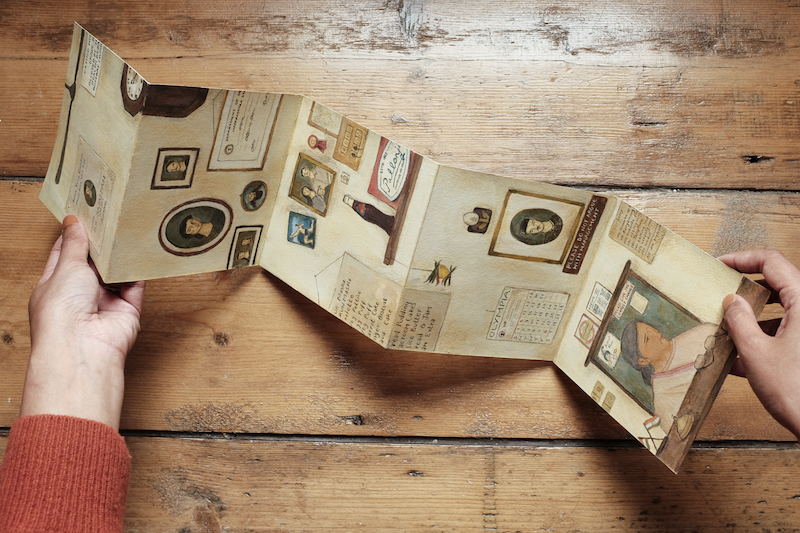
five panel concertina illustration - ‘the family run cafe’
On the first day of our trip to India last November, we explored the Irani cafes of Bombay. Although I have spent a lot of time in this city, I had never visited these characterful spaces created by Iranian migrants in the 19th-century. My dad, who grew up in South Bombay when visits to these cafes were a regular part of his routine, noticed my interest and quickly turned into our guide to the Parsi community of the city, taking us on a tour of pani kam chai, bun maska, mava cakes and fresh lime soda.
“Ethic and Ambience
Irani cafés soon became iconic features in their localities. They became known for good, honest, reasonably priced food and beverages. Their clients were invariably individuals of modest means for whom the cafés provided a place to drop-in for an inexpensive cup of tea, wholesome snacks, or a meal – or to just congregate and socialize, for the cafés served a social function as well. By welcoming everyone, the Irani cafés created a micro environment that was classless and casteless – free from societal and religious distinctions and divisions. Some café owners even posted signs such as ‘everyone welcome’ or ‘all castes welcome’. Others displayed religious icons from different religions on their walls. ”
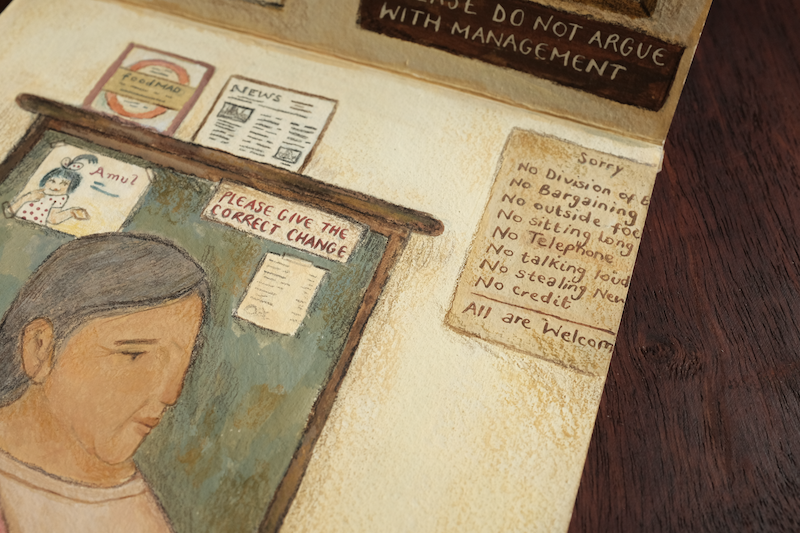
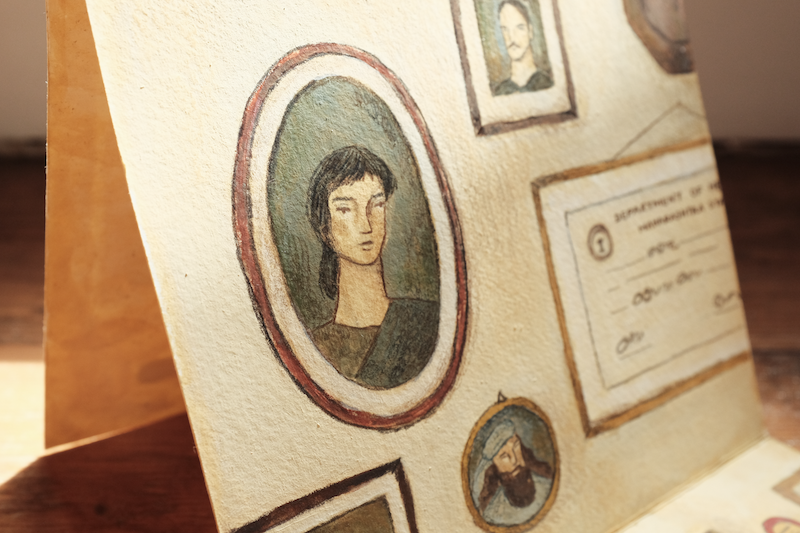
There is something so charming about these cafes, they feel like time capsules, sparking a sense of nostalgia. The peeling paint, gingham tablecloths, quirky signage, their rich history. The most endearing quality was their welcoming nature, they offered safe spaces for all members of the community, regardless of caste or class. I wanted to capture all of these elements through an illustration but struggled to narrow down on a way of doing this.
In the back of my mind I knew I wanted to use a Hahnemühle concertina book that I was gifted a while back, but its ten page span intimidated me and I avoided the idea for a while. I procrastinated, drawing sketches which felt aimless at the time. Eventually, I decided to cut my Hahnemühle in half to create a five panel project which helped make it feel less overwhelming.
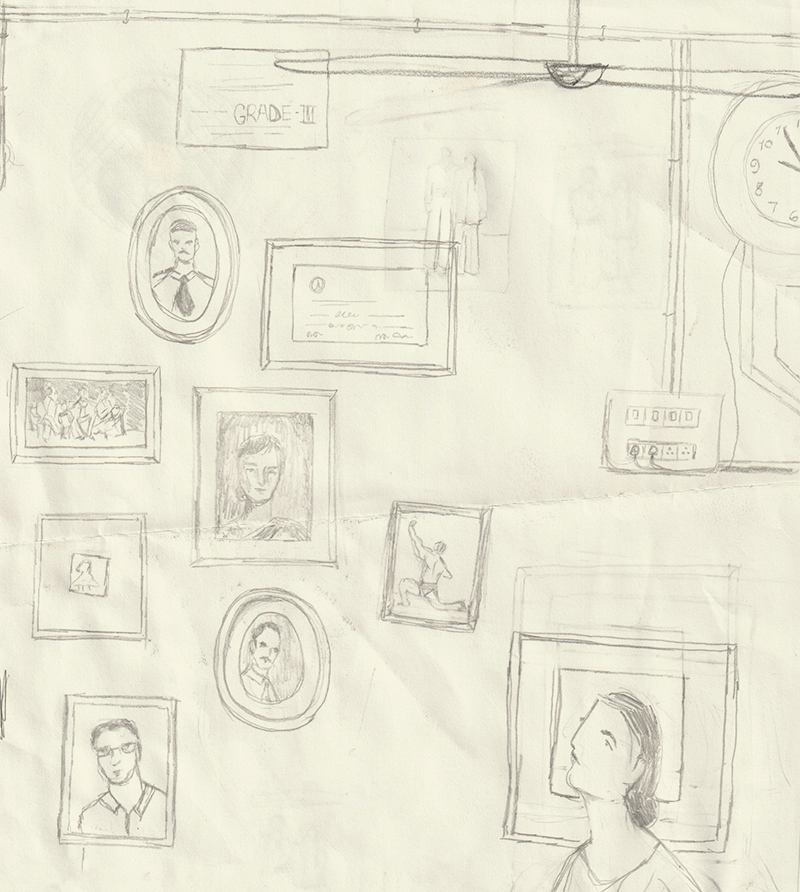

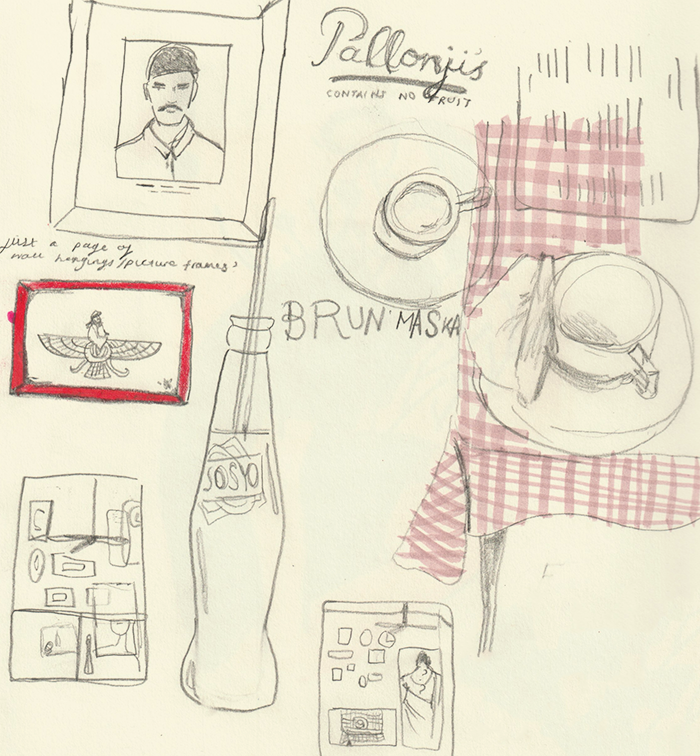
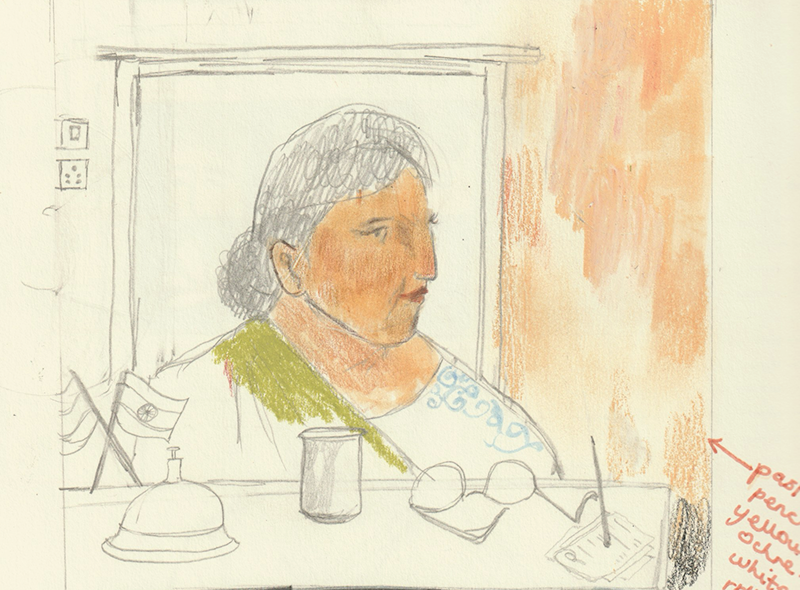

initial sketches and colour tests
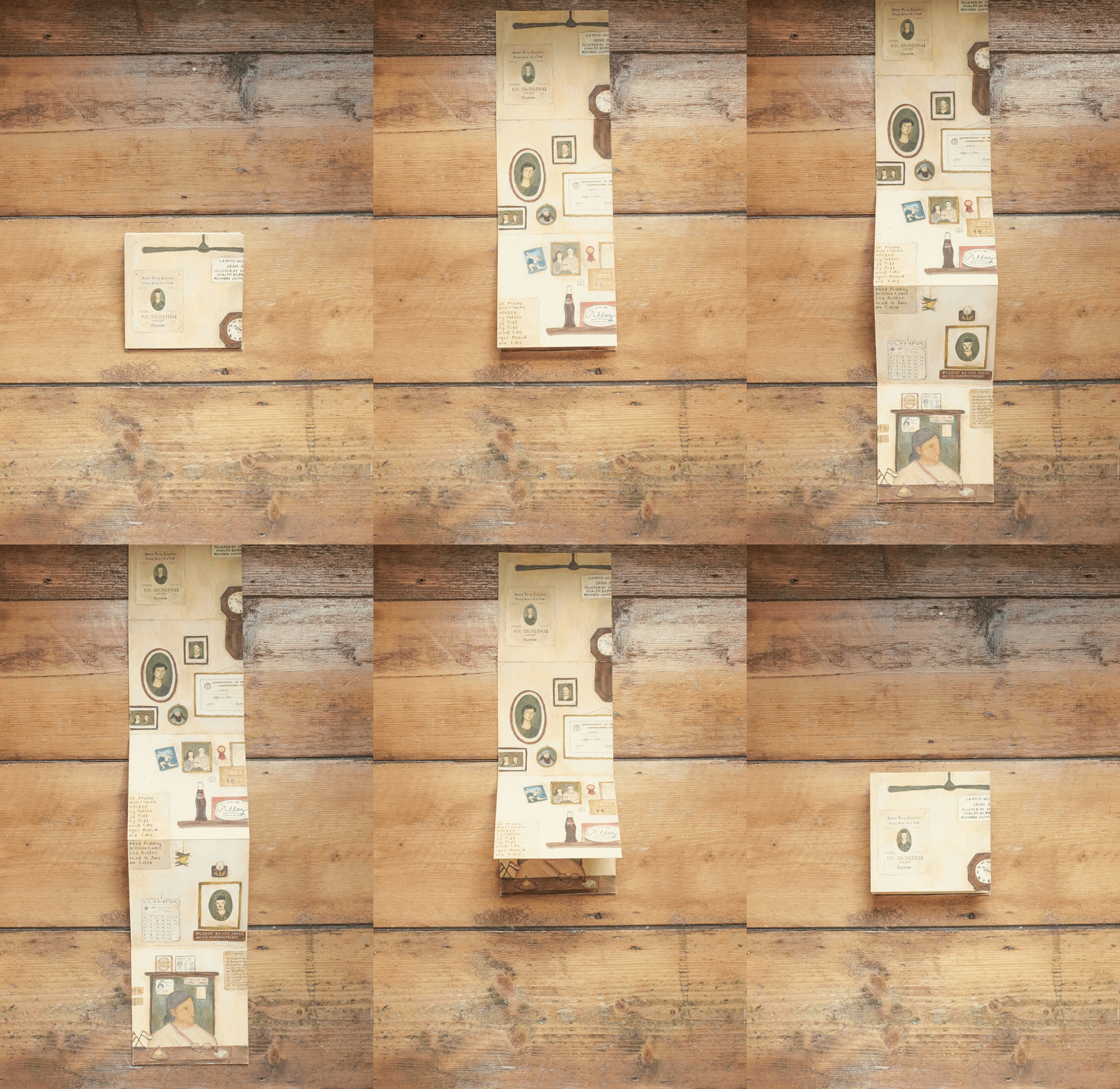
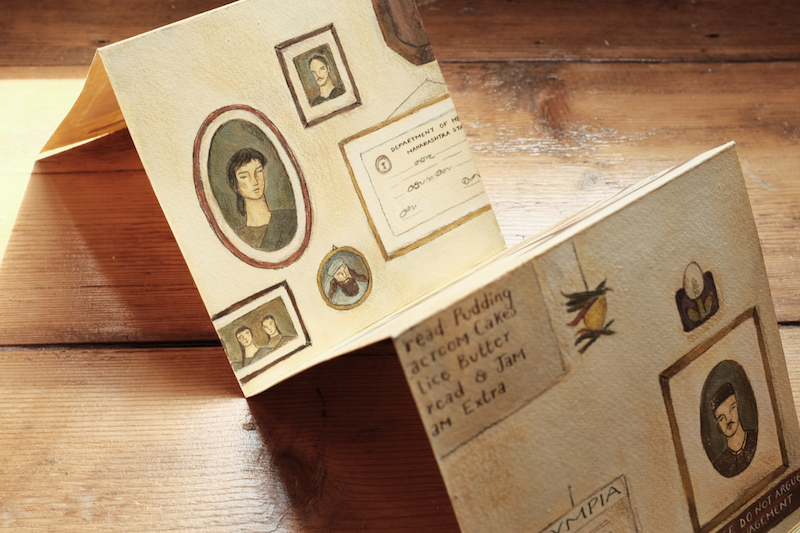
The final concertina, ‘The Family Run Cafe’, is rendered in acrylic gouache, coloured pencil, Neocolor, ink and pastel on fine grain watercolour paper. It begins at the top of a weathered wall, featuring an old ceiling fan that patrons sit under, a vintage poster advertising the cafe and a proudly displayed health grade from the Bombay Public Health Department. As you unfold the concertina, it reveals more details including a classic art deco wall clock, sepia toned family portraits, a photo of a Parsi bodybuilder, an advert for Pallonji’s - an iconic Parsi raspberry soda, a set of amusing rules of the cafe. The final panel features the current owner of the family run establishment.
This project really lit me up, it combined so many of my interests - mixed media, miniature portraits, old family photos, vintage adverts, hand-painted signs, art deco typefaces commonly seen around Bombay and obviously, the city itself. It also pushed me to draw objects I wouldn’t usually draw like a glass soda bottle or a brass bell. For a while I’ve been finding it difficult to venture outside of drawing portraits, which I got one step closer to overcoming with this project. It has also sparked an eagerness to learn more about hand lettering. I experimented with ink and dip pen using the Brause Blue Pumpkin nib to create the posters and signs in this illustration. I’m now fixated on vintage Indian advertising and hand-painted signs and can’t wait to explore them further.
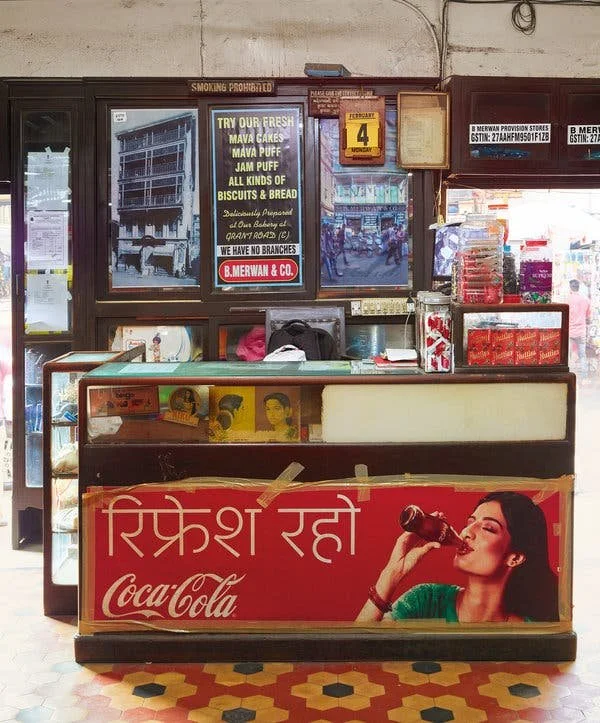
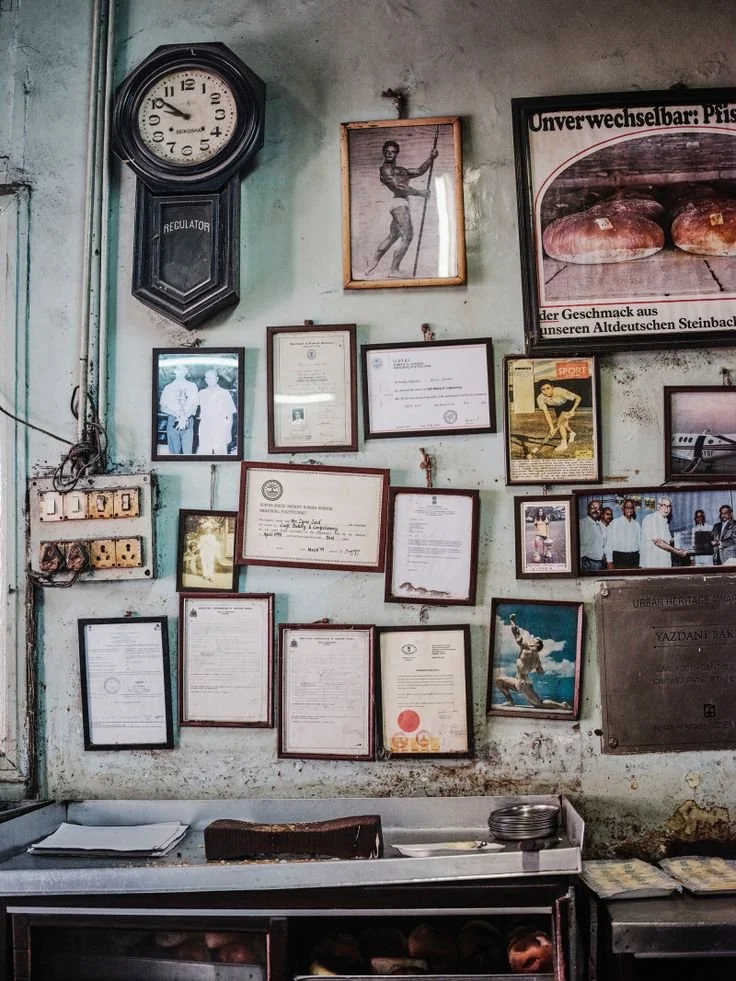

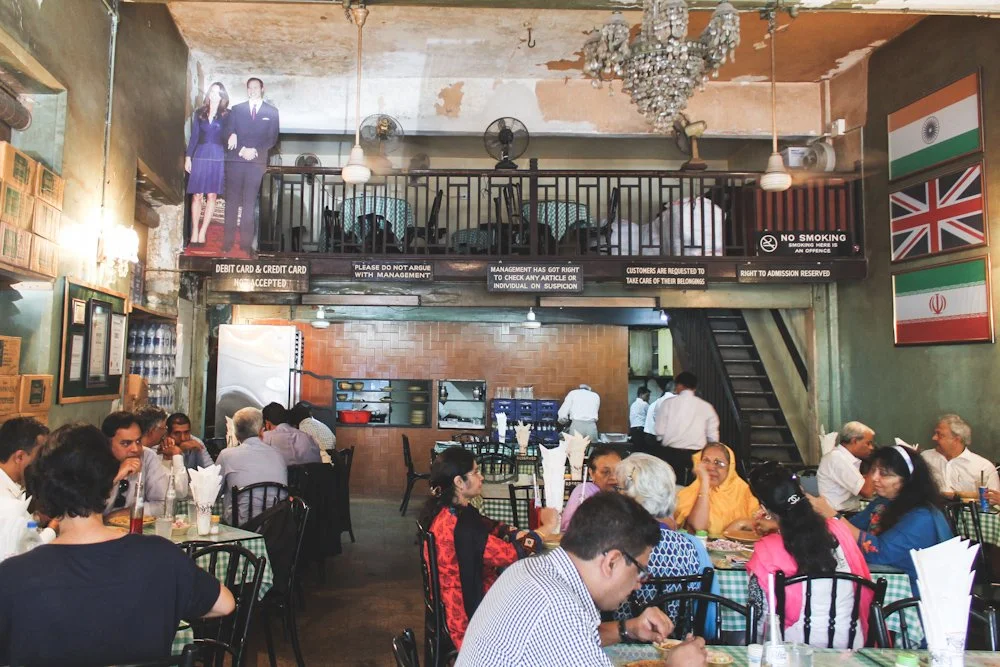

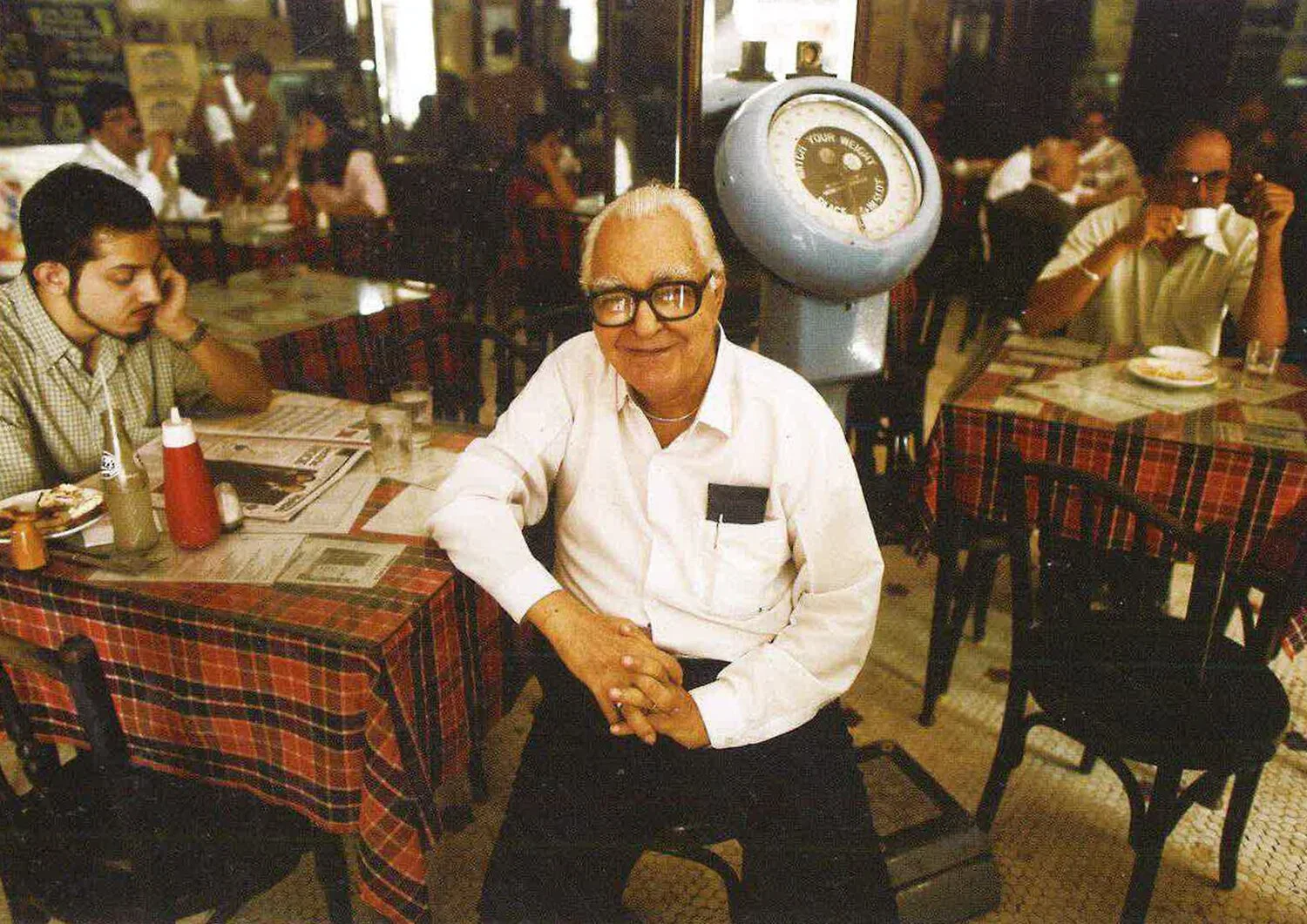
Cafes that inspired me:
of course, Dishoom - their branding is unbeatable and our copy of their beautiful cookbook is a treasure trove of inspiration. I also really love reading their journal
Whilst researching I stumbled upon this lovely blog, Irani Chai Mumbai, a heartfelt archive of interviews, photographs and reflections about Irani cafes. Sadly, numbers of these cafes has been fading, which is why efforts to document and preserve their legacy is so appreciated.
Later this week, I’ll be tabling at a zine and book fair organised by a small, indie publisher in my city. I’m working on having prints of this concertina ready by then - although figuring out how to scan and print something of this length is proving to be tricky. Still, I’m excited to share the piece and connect with people at the fair. What began as a quiet tribute to a unique cultural space ended up leading to so many more curiosities.